
About & history
A coaching inn in a town that has been lived in for longer than anywhere else in Britain, a few minutes from its most famous monument.
A family-run inn, not a chain
The Antrobus is a family-run hotel and event venue at 15 Church Street, in the centre of Amesbury.
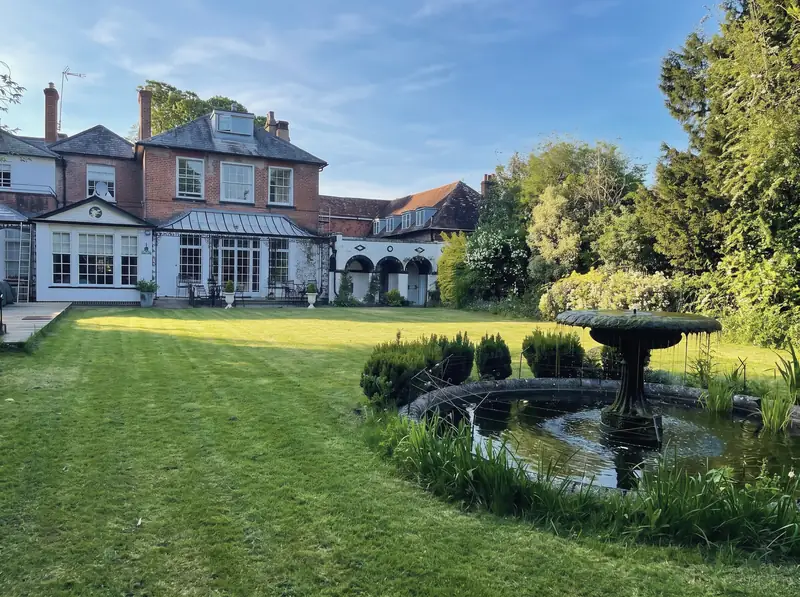
The building is Grade-listed and has the quirks that come with age: rooms of different shapes, a proper staircase, fireplaces that are used. Behind it is a large walled rose garden that most people walking past on the street have no idea is there.
People come for three main reasons. Stonehenge is under three miles away. The garden and its arbour are licensed for weddings. And the bar is open to everyone, with a new Italian restaurant opening soon, which gives locals a reason to come in on a weeknight.
Built for travellers
The Antrobus dates from the 17th century, when people crossing Salisbury Plain by coach needed somewhere to stop. A coaching inn did a simple job: fresh horses for the coach, and food, drink and a bed for the passengers.
The horses have gone. The rest of the job has not changed much.
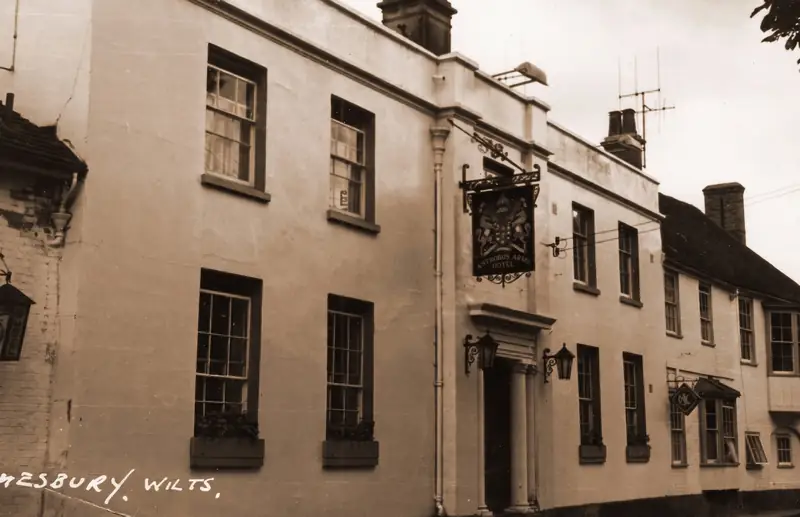
The story starts with an inn called The Chopping Knife, recorded on this site in 1635. The house you see today replaced it in 1848, and the building is now Grade II listed. Beneath it are extensive cellars and tunnels, which local tradition says run to the church opposite and to Amesbury Abbey.
- 1635An inn called The Chopping Knife is recorded on the site.
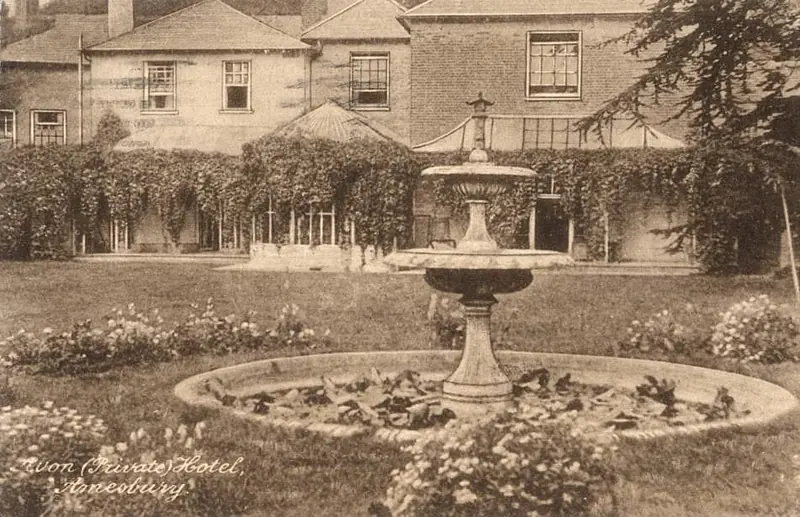
- 1848Four tenements are pulled down to build the present house, Wyndersham House. It is a private home first, then a school for young gentlemen, then a vicarage.
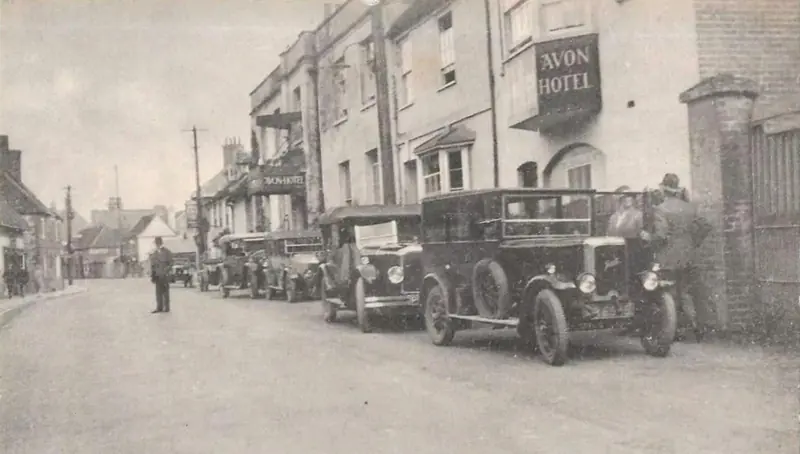
- 1923The house becomes a hotel: The Avon, a temperance hotel named after the river it stands beside.
- 1962The hotel is renamed The Antrobus.
- 1965From 3 to 6 May the Beatles stay while filming Help! on Salisbury Plain.
- LaterThe BBC uses the hotel as a location for the Miss Marple story Nemesis.
The family who owned Stonehenge
For nearly a century Stonehenge was private property, and it belonged to the Antrobus family. They bought the Amesbury estate in the 1820s, and the stones came with it.
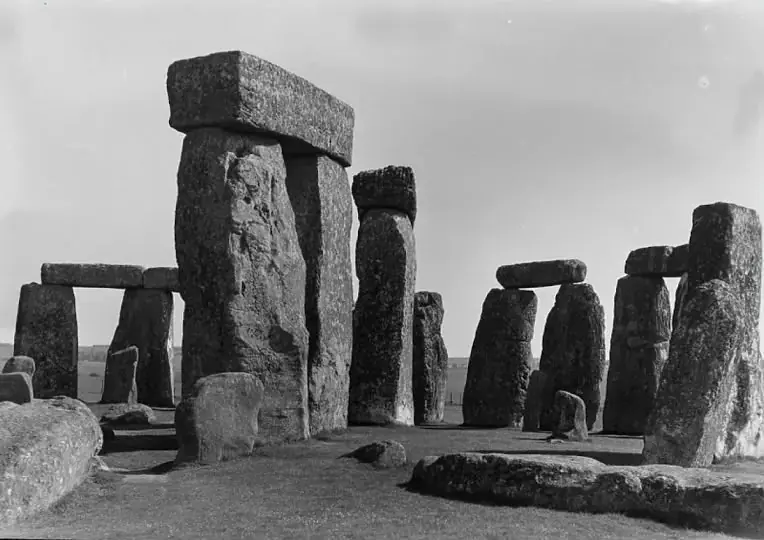
In 1915 the estate was broken up and sold at auction in Salisbury. Lot 15 was Stonehenge. A local man named Cecil Chubb bought it for £6,600, reportedly on impulse, and three years later gave it to the nation.
The hotel has carried the family's name since 1962. Amesbury Abbey, the house whose grounds begin across the road, was the Antrobus family seat.
When the Beatles checked in
The Beatles stayed at The Antrobus. One of the bedrooms is now the Beatles Suite, and you can book it.
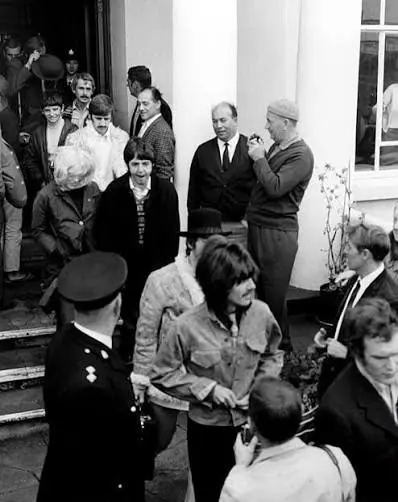
They came in May 1965 to film Help! on Salisbury Plain and stayed at the hotel, then the Antrobus Arms, for three days while they worked. The photograph shows the crowd at the hotel's front porch.
The cameras have been back since. The BBC used the hotel as a location for the Miss Marple story Nemesis.
The guests who never checked out
A building this old collects stories. Staff and guests have reported a little old lady, children playing where there are no children, and lights and televisions that switch themselves on and off. There is a lantern that is said to move by itself.
Whoever they are, they are described as friendly. The exception is a spirit in the cellar who, we are told, does not always like to share his space.
We make no promises either way. Ghost-hunt evenings have been held here in the past, with dinner first.
Amesbury was here before Stonehenge
Amesbury is often described as the longest continuously inhabited settlement in Britain. At Blick Mead, a spring on the edge of town, archaeologists have found flint tools and the remains of meals left by hunter-gatherers thousands of years before Stonehenge was built. People seem to have returned to the same spot generation after generation.
Later arrivals left bigger marks. Stonehenge, Woodhenge and Durrington Walls are all within a few miles. In 2002 the grave of the man now called the Amesbury Archer was found on the edge of town. He had been buried around 2300 BC with gold hair ornaments and copper knives, and had grown up in central Europe.
An abbey was founded here in 979. It was refounded as a priory by Henry II, and Eleanor of Provence, the widow of Henry III, retired to it and died here in 1291. Legend adds one more royal resident: Queen Guinevere is said to have taken the veil at Amesbury after Arthur's death. The abbey church of St Mary and St Melor still stands on Church Street, directly opposite the hotel.
For what to see and how to plan a visit, read our guide to Stonehenge and things to do.